Robotic Cancer Surgery in India: How Minimally Invasive Treatment Works
By: SPARSH Hospital
Posted on April 24, 2026
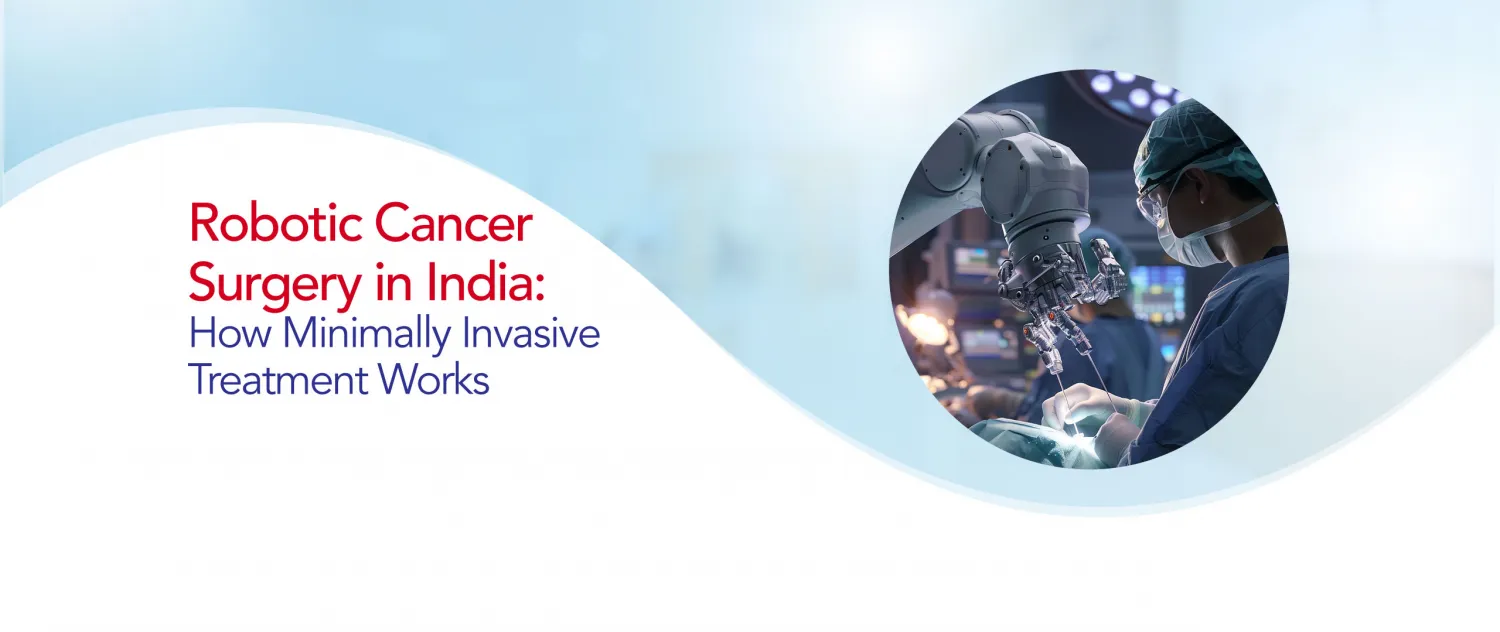
Robotic cancer surgery India is rapidly emerging as a preferred treatment pathway for international patients seeking precision oncology care at accessible costs. This article explores how minimally invasive cancer treatment India works, what types of cancers are treated, recovery outcomes, how robotic surgery compares with traditional open surgery, and why SPARSH Hospitals – Global Care is a destination of choice for global oncology patients.
Cancer treatment has transformed dramatically over the past decade. Where open surgery once required large incisions and prolonged recovery, robotic cancer surgery now enables highly precise tumour removal with faster healing and fewer complications.
What is Robotic Cancer Surgery?
Robotic-assisted cancer surgery uses advanced systems such as the da Vinci Surgical System, allowing surgeons to operate through tiny keyhole incisions with high-definition 3D visualization and tremor-free instrument control.
The robotic platform enhances surgical precision while remaining fully controlled by the surgeon, enabling safer access to complex anatomical areas.
Types of Cancer Treated with Robotic Surgery
| Cancer Type | Procedure | Benefits |
|---|---|---|
| Prostate cancer | Robotic radical prostatectomy | Improved nerve preservation |
| Kidney cancer | Robotic nephrectomy | Maximum tissue preservation |
| Colorectal cancer | Robotic colectomy | Better pelvic precision |
| Bladder cancer | Robotic cystectomy | Improved surgical visibility |
| Gynecological cancers | Robotic hysterectomy | Reduced trauma |
| Lung cancer | Robotic lobectomy | Minimal chest wall disruption |
| Liver & pancreatic cancer | Robotic hepatectomy | Complex tumour precision |
| Thyroid cancer | Robotic thyroidectomy | Scarless approach |
Robotic Surgery vs Traditional Open Surgery
| Parameter | Open Surgery | Robotic Surgery |
|---|---|---|
| Incision size | Large | Keyhole incisions |
| Blood loss | Moderate to high | Significantly reduced |
| Hospital stay | 5–10 days | 1–3 days |
| Recovery time | 4–8 weeks | 1–3 weeks |
| Post-operative pain | High | Low to moderate |
| Infection risk | Higher | Lower |
| Precision | Limited | 10× magnified accuracy |
| Scarring | Significant | Minimal |
How the Robotic Surgery Procedure Works
- Pre-surgical imaging and multidisciplinary tumour board review
- General anaesthesia and placement of robotic ports
- Robotic system docking
- Precision tumour removal using 3D visualization
- Reconstruction if required
- Early mobilisation and discharge within 1–3 days
Benefits of Minimally Invasive Cancer Surgery
- Higher surgical precision
- Minimal blood loss
- Shorter hospital stay
- Faster recovery
- Better organ preservation
- Lower complication risk
Robotic Surgery with Advanced Cancer Therapies
Robotic oncology is often combined with chemotherapy, radiation therapy, immunotherapy, or CAR T-cell therapy depending on tumour type and stage, ensuring comprehensive multidisciplinary cancer care.
Why International Patients Choose India for Robotic Cancer Surgery
- NABH and JCI accredited hospitals
- Globally trained oncological surgeons
- No long waiting lists
- English-speaking care teams
- End-to-end international patient support
- Telemedicine follow-up after discharge
- Significantly lower treatment cost
Begin Your Cancer Care Journey with SPARSH Hospitals – Global Care
Learn About Robotic Oncology
Get a Free Cost Estimate
Phone / WhatsApp: +91 080 61 222 000
WhatsApp (direct): +91 98442 61374







 WhatsApp Us