Epilepsy Surgery in India for Drug-Resistant Epilepsy: When Medication Is Not Enough
By: SPARSH Hospital
Posted on July 27, 2026
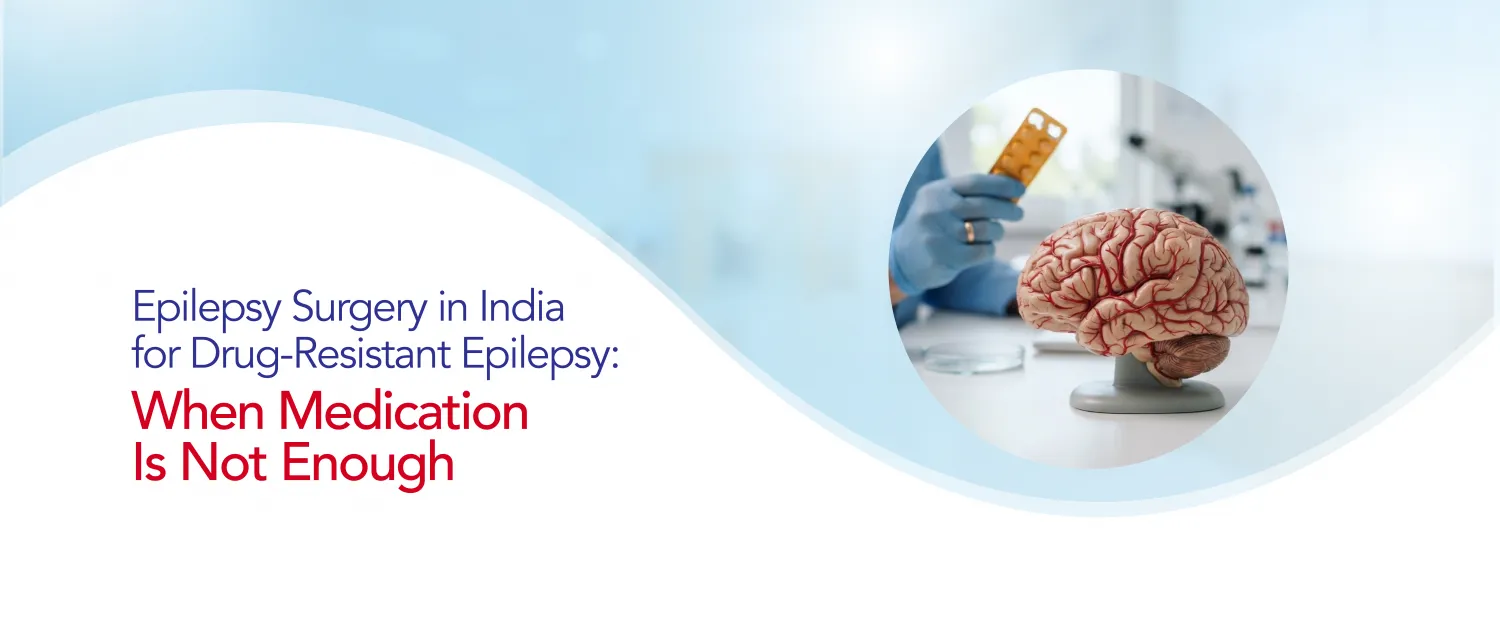
For a large number of people living with epilepsy, seizures are well controlled with medication. But for nearly one in three patients, seizures continue despite trying two or more well-chosen anti-seizure drugs. This condition, known as drug-resistant epilepsy, can significantly affect daily life, safety, and long-term brain health. For these patients, epilepsy surgery in India has emerged as a safe, well-established, and often life-changing option. This blog walks through when surgery is recommended, how successful it is, what it costs for international patients, and the advanced treatment options available today.
- Understanding Drug-Resistant Epilepsy
- When Is Epilepsy Surgery Recommended for Drug-Resistant Epilepsy?
- Neurosurgery for Epilepsy: Treatment Options
- Epilepsy Surgery Success Rate in India
- Cost of Epilepsy Surgery for International Patients
- Advanced Epilepsy Treatment in India
- Why Choose SPARSH Hospitals – Global Care
- Take the Next Step Towards Seizure Freedom
Understanding Drug-Resistant Epilepsy
Epilepsy is considered drug-resistant, or refractory, when seizures persist despite adequate trials of at least two appropriately chosen and correctly dosed anti-seizure medications. For patients in this situation, continuing to add or switch medications rarely brings meaningful seizure control. A structured refractory epilepsy treatment plan, built around accurate diagnosis and specialist evaluation, becomes essential at this stage. Uncontrolled seizures are not just inconvenient, they carry real risks, including injury, cognitive and memory decline, disruption to education or work, and in some cases, a higher risk of sudden unexpected death in epilepsy (SUDEP).
When Is Epilepsy Surgery Recommended for Drug-Resistant Epilepsy?
Doctors typically consider seizure surgery once a patient has been tried on at least two suitable medications without adequate seizure control. Before any surgical decision is made, patients go through a detailed pre-surgical evaluation that may include prolonged video-EEG monitoring, high-resolution MRI, PET or SPECT imaging, and neuropsychological testing. The goal of this evaluation is to precisely map the seizure-generating region of the brain and confirm that it can be treated safely without affecting critical functions such as speech, memory, or movement.
This is where Comprehensive Neuroscience Care in India plays a central role. A dedicated team of epileptologists, neurosurgeons, neuroradiologists, and neuropsychologists work together to decide whether a patient is a good surgical candidate, and if so, which procedure will offer the best chance of seizure freedom.
Neurosurgery for Epilepsy: Treatment Options
Once a patient is confirmed as a suitable candidate, several neurosurgery for epilepsy techniques may be considered, depending on where the seizures originate and how the brain is organised in that individual:
- Resective surgery: removing the small, clearly identified area of the brain responsible for triggering seizures.
- Laser interstitial thermal therapy: a minimally invasive option to destroy seizure-triggering tissue with heat, guided by real-time imaging.
- Corpus callosotomy or hemispherectomy: reserved for select, severe cases, particularly in children with widespread or one-sided seizure activity.
- Neuromodulation: including vagus nerve stimulation and deep brain stimulation, used when resective surgery is not suitable.
Many of these procedures rely on Advanced Neurosurgery Treatments, supported by intraoperative neuromonitoring and neuronavigation to ensure precision. When the seizure focus lies close to areas controlling speech or movement, surgeons may use Awake Craniotomy for Brain Surgery, allowing real-time mapping of brain function during the operation itself. For patients who are not candidates for resective surgery, Deep Brain Stimulation for Neurological Disorders offers a well-studied alternative that can meaningfully reduce seizure frequency.
Epilepsy Surgery Success Rate in India
One of the most common questions patients and families ask is how well surgery actually works. In carefully selected patients, particularly those with a clearly localised seizure focus such as temporal lobe epilepsy, seizure-free outcomes are reported in a large majority of cases after resective surgery, with many patients able to reduce or eventually stop their anti-seizure medication under medical supervision. Even when complete seizure freedom is not achieved, most patients experience a significant reduction in seizure frequency and severity, along with improvements in memory, mood, and overall quality of life.
Outcomes depend heavily on accurate patient selection, imaging quality, and surgical experience, which is why epilepsy surgery in India at centres with dedicated epilepsy monitoring units and multidisciplinary teams tends to deliver results comparable to leading international programmes, at a fraction of the cost.
Cost of Epilepsy Surgery for International Patients
Cost is a major consideration for families travelling from abroad. Epilepsy surgery cost in India is considerably lower than in the United States, United Kingdom, or the Middle East, without any compromise on surgical expertise, technology, or safety standards. Actual pricing depends on the type of surgery, length of hospital stay, pre-surgical evaluation required, and any post-operative rehabilitation.
These figures are approximate and vary by individual case complexity. International patients can get Personalized Treatment Cost Estimate before travelling, so there are no surprises around the total cost of care.
Advanced Epilepsy Treatment in India
India has invested heavily in the infrastructure needed for precise, safe drug resistant epilepsy treatment. This includes prolonged video-EEG telemetry units, 3T MRI with epilepsy-specific protocols, PET-CT and SPECT imaging for functional mapping, intraoperative neuromonitoring, and neuronavigation systems that guide surgeons with millimetre-level accuracy. These same technologies and multidisciplinary teams also support related complex conditions, such as those addressed through Brain Tumour Surgery and Advanced Neurosurgical Care, reflecting the depth of neuroscience expertise available.
Patients researching complex brain procedures often also read our detailed Brain Tumor Surgery in India: Treatment and Recovery Guide, which outlines what to expect through diagnosis, surgery, and recovery, much of which mirrors the structured pathway followed for epilepsy surgery patients.
Why Choose SPARSH Hospitals – Global Care
SPARSH Hospitals – Global Care brings together 8 Quaternary Care Hospitals and 70+ specialities under one trusted network, with a dedicated neuroscience programme built specifically for complex, drug-resistant conditions. From the first teleconsultation to final discharge, the International Patient Journey at SPARSH Hospitals – Global Care is designed to support patients travelling from abroad, with visa assistance, airport transfers, multilingual coordinators, and transparent cost planning, so families can focus entirely on treatment and recovery.
Take the Next Step Towards Seizure Freedom
If medication alone has not been enough to control your seizures, it may be time to explore epilepsy surgery in India with a team experienced in refractory epilepsy treatment and advanced neurosurgery for epilepsy. SPARSH Hospitals – Global Care combines specialist expertise, advanced diagnostics, and dedicated international patient support to guide you safely from diagnosis through recovery.
Book an appointment with Dr. Shivakumar S Kupanur at SPARSH Hospitals – Global Care today to discuss your evaluation, treatment plan, and personalised cost estimate.



 WhatsApp Us