Deep Brain Stimulation (DBS) for Parkinson's Disease: Procedure, Benefits & Eligibility
By: SPARSH Hospital
Posted on June 30, 2026
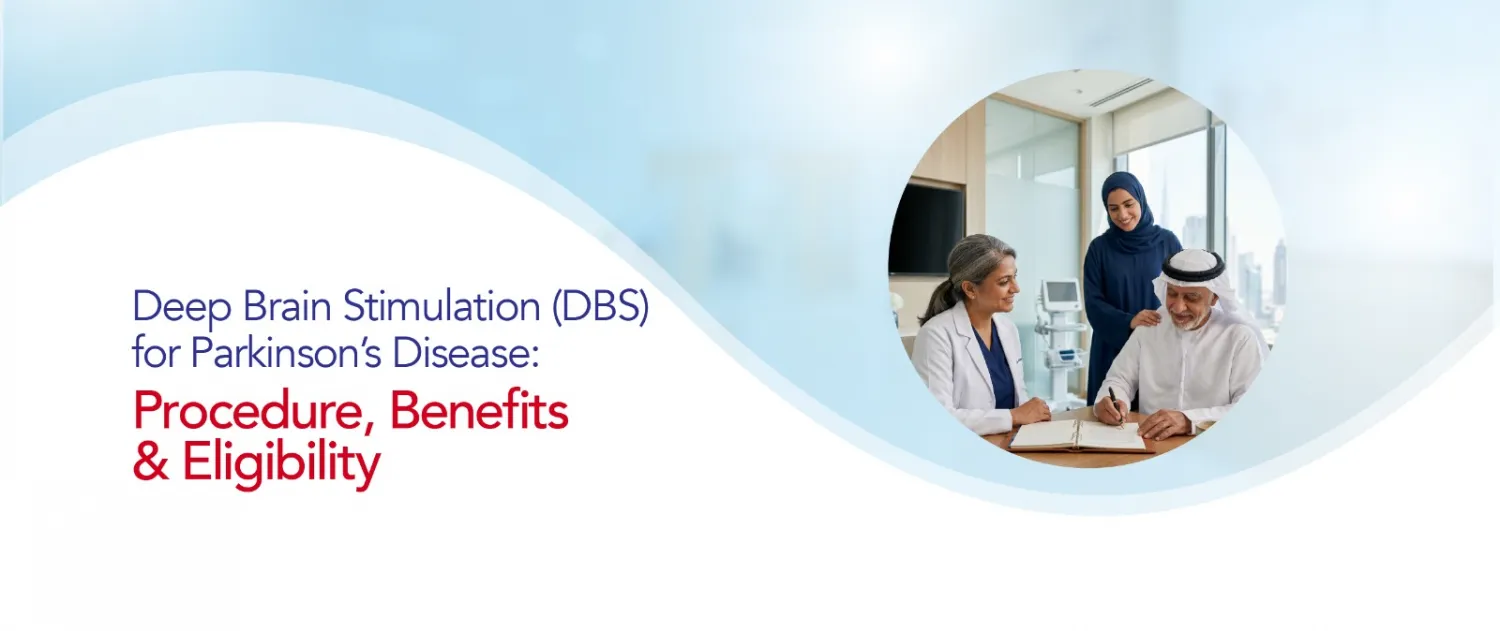
Table of Contents
- What Is Deep Brain Stimulation (DBS) and How Does It Help Parkinson’s Disease?
- How Does DBS Neurosurgery Work? The Step-by-Step Procedure
- STN Stimulation: Why the Subthalamic Nucleus Is the Primary Target
- Who Is Eligible for Deep Brain Stimulation Surgery?
- Is DBS Safe and Reversible for Parkinson’s?
- DBS Surgery Recovery Time India
- Benefits of DBS for Parkinson’s Disease
- Adaptive Deep Brain Stimulation Parkinson’s: The Next Frontier
- DBS Side Effects Management
- Parkinson’s DBS Treatment Cost India: A Global Comparison
- Why Choose SPARSH Hospitals – Global Care for DBS Neurosurgery?
- Take the First Step Towards Better Movement and Quality of Life
Parkinson’s disease is a progressive neurological disorder affecting millions worldwide, causing tremors, rigidity, and impaired movement. While medications remain the first line of treatment, they often lose effectiveness over time. Deep brain stimulation surgery has emerged as a transformative option for eligible patients, offering significant symptom relief and improved quality of life. This blog explores the science behind DBS for Parkinson’s disease, the surgical procedure, patient eligibility, recovery, costs in India, and the latest advances such as adaptive deep brain stimulation Parkinson’s therapy. Whether you’re a patient, caregiver, or medical professional, this comprehensive guide will help you understand every aspect of DBS neurosurgery at SPARSH Hospitals – Global Care, India’s trusted destination for quaternary neurological care.
What Is Deep Brain Stimulation (DBS) and How Does It Help Parkinson’s Disease?
DBS for Parkinson’s disease is a surgically implanted neurostimulation system that delivers continuous electrical impulses to specific brain targets, modulating abnormal neural circuits responsible for motor symptoms. Often described as a ‘pacemaker for the brain,’ deep brain stimulation surgery does not cure Parkinson’s disease, but it can significantly reduce tremors, stiffness, slowness, and dyskinesias, particularly when medications alone are no longer sufficient.
To Learn about DBS procedure and how it works at the neurological level, visit our dedicated procedure page.
How Does DBS Neurosurgery Work? The Step-by-Step Procedure
DBS neurosurgery is performed in multiple stages by a specialized multidisciplinary team comprising neurosurgeons, neurologists, and neurophysiologists.
Stage 1: Pre-Surgical Evaluation
Candidates undergo comprehensive neurological assessments, MRI brain imaging, neuropsychological testing, and medication review. The target brain structure, such as the subthalamic nucleus for STN stimulation, is precisely mapped.
Stage 2: Lead Implantation
Under general or local anesthesia, the neurosurgeon drills a small burr hole in the skull. Using stereotactic frames and intraoperative imaging, thin electrode leads are guided to the target area. STN stimulation (subthalamic nucleus) is the most common target for Parkinson’s; the globus pallidus internus (GPi) is another option depending on symptom profile.
Stage 3: IPG (Pulse Generator) Implantation
A small implantable pulse generator (IPG), similar to a pacemaker, is placed under the skin near the collarbone or chest. It connects to the brain leads via thin wires running under the skin.
Stage 4: Programming and Optimization
Once the system is implanted, the neurologist programs the stimulation parameters, adjusting frequency, amplitude, and pulse width to maximize symptom control while minimizing side effects. This fine-tuning process may take several months.
To Explore neuroscience specialization and the multidisciplinary team behind DBS care at SPARSH Hospitals – Global Care.
STN Stimulation: Why the Subthalamic Nucleus Is the Primary Target
STN stimulation refers to the targeted delivery of electrical impulses to the subthalamic nucleus, a small lens-shaped region of the brain that becomes hyperactive in Parkinson’s disease. This overactivity contributes to the characteristic motor symptoms. By modulating the STN’s output, STN stimulation helps restore more normal signalling across the basal ganglia-thalamo-cortical circuit, leading to improved motor control.
Who Is Eligible for Deep Brain Stimulation Surgery?
Not every Parkinson’s patient is a candidate for deep brain stimulation surgery. Eligibility is assessed through a thorough pre-surgical workup.
Ideal candidates typically:
- Have had Parkinson’s disease for at least 4-5 years with a confirmed diagnosis
- Show a good response to levodopa, even if its effects wear off (‘off’ periods)
- Experience significant motor fluctuations or dyskinesias despite optimised medication
- Are in reasonably good overall health without severe cognitive impairment or untreated depression
- Have realistic expectations about the outcomes of DBS neurosurgery
Patients with dementia, atypical parkinsonism (e.g., PSP, MSA), or major psychiatric illness may not be suitable candidates. Age alone is not an exclusion criterion, though older age can affect risk-benefit considerations.
To Examine neurosurgical excellence at SPARSH Hospitals – Global Care, where our team evaluates each patient individually for surgical candidacy.
Is DBS Safe and Reversible for Parkinson’s?
Deep brain stimulation surgery is considered both safe and reversible when performed at high-volume, experienced centres. The key advantages include:
- The hardware can be switched off, reprogrammed, or removed if needed
- No brain tissue is destroyed during the procedure
- Stimulation parameters can be adjusted non-invasively at any time
- Reversibility: if a patient’s condition changes, or if adverse effects occur, the DBS system can be turned off or explanted
While the procedure is generally safe, as with any brain surgery, risks include infection (1-3%), lead misplacement, bleeding (less than 1%), or hardware malfunction. Neuropsychiatric effects such as mood changes are managed through careful programming and multidisciplinary follow-up.
Our neurosurgical outcomes are reflected in real patient stories. View movement disorder case studies from Dr. Arvind Bhateja’s practice at SPARSH Hospitals – Global Care.
DBS Surgery Recovery Time India
One of the most common questions patients ask is about DBS surgery recovery time India. Here is a general timeline:
| Phase | Timeline & Details |
|---|---|
| Hospital Stay | 3 to 5 days for lead implantation; IPG placement may be done in the same sitting or in a second procedure |
| Initial Recovery | 2 to 4 weeks: wound healing, staple removal, and initial device check |
| DBS Programming | Begins 2 to 4 weeks post-surgery; initial activation and parameter setting |
| Optimisation Phase | 3 to 6 months: gradual adjustments to stimulation for optimal symptom control |
| Return to Daily Activity | Most patients resume routine activities within 4 to 6 weeks post-surgery |
| International Patients | SPARSH Hospitals – Global Care offers telemedicine follow-up for remote programming, reducing the need for repeat travel |
For international patients seeking Parkinson’s DBS treatment cost India and planning their care journey, SPARSH Hospitals – Global Care provides end-to-end coordination including visa assistance, accommodation guidance, and telemedicine follow-up.
Understand patient journey at SPARSH Hospitals – Global Care to see how we support you from first contact to discharge and beyond.
Benefits of DBS for Parkinson’s Disease
The benefits of DBS for Parkinson’s disease extend well beyond tremor control:
- Tremor reduction: Up to 70-90% improvement in tremor in suitable candidates
- Reduced ‘off’ time: Less time spent in the debilitating ‘off’ state between medication doses
- Lower medication doses: Many patients can reduce their levodopa requirements, limiting drug-induced side effects
- Dyskinesia control: Reduction in involuntary movements caused by long-term medication use
- Improved quality of life: Better mobility, sleep, and independence in daily activities
- Long-term durability: Clinical evidence supports sustained benefit at 5-10 years post-implant
You may also find it helpful to Read brain tumor surgery blog to understand the neurosurgical environment and standards at SPARSH Hospitals – Global Care.
Adaptive Deep Brain Stimulation Parkinson’s: The Next Frontier
Adaptive deep brain stimulation Parkinson’s (aDBS) represents the most significant recent advance in this field. Unlike conventional DBS, which delivers constant stimulation, aDBS uses real-time brain signal feedback to automatically adjust stimulation parameters in response to the patient’s neural state.
Key benefits of adaptive deep brain stimulation Parkinson’s include:
- Reduced side effects by avoiding overstimulation during periods when symptoms are mild
- More personalised therapy that matches the brain’s moment-to-moment needs
- Potentially improved battery life of the implanted device
- Superior motor outcomes in early clinical trials compared to conventional stimulation
SPARSH Hospitals – Global Care keeps pace with the global advances in DBS neurosurgery, and our specialists evaluate each patient for the most appropriate stimulation strategy, including emerging closed-loop aDBS systems.
DBS Side Effects Management
DBS side effects management is a critical part of the long-term success of the therapy. Some side effects are hardware-related, while others are stimulation-related and fully adjustable.
Common Stimulation-Related Side Effects
- Speech or swallowing changes (dysarthria or dysphagia)
- Tingling or numbness (paraesthesia)
- Mood changes, including hypomania or depression
- Gait or balance issues at certain stimulation settings
How Side Effects Are Managed
- All stimulation parameters (frequency, amplitude, pulse width) are adjustable non-invasively via a programmer
- A neurologist or DBS specialist fine-tunes settings during programmed follow-up sessions
- Psychiatric side effects are addressed through multidisciplinary input from neurologists, psychiatrists, and psychologists
- Hardware-related issues (lead dislodgement, infection) are addressed surgically if required.
Parkinson’s DBS Treatment Cost India: A Global Comparison
Parkinson’s DBS treatment cost India is one of the most searched topics for patients considering medical travel. India offers world-class deep brain stimulation surgery at a fraction of the cost in Western countries, without compromising on quality or safety.
| Factor | India (SPARSH Hospitals – Global Care) | United States |
|---|---|---|
| Device Cost | Included in package | Billed separately (very high) |
| Wait Time | 2 to 4 weeks | Several months |
| Hospital Accreditation | NABH Accredited | Joint Commission |
| International Support | Dedicated international care coordinator, telemedicine | Limited coordination for foreign patients |
Costs vary based on device model, hospital stay, and individual clinical needs. Contact SPARSH Hospitals – Global Care for a personalised estimate.
Why Choose SPARSH Hospitals – Global Care for DBS Neurosurgery?
SPARSH Hospitals – Global Care is a network of 8 Quaternary Care Hospitals and 70+ specialities, making it one of India’s foremost destinations for complex DBS neurosurgery and movement disorder care.
- Expert Neurosurgical Team: Led by senior neurosurgeons with dedicated expertise in movement disorder surgery and deep brain stimulation surgery
- Advanced Technology: State-of-the-art intraoperative imaging, stereotactic navigation, and neurophysiology support for precise lead placement
- Multidisciplinary Care: Neurology, neurosurgery, neuropsychology, rehabilitation, and physiotherapy working in a coordinated team
- International Patient Services: Dedicated coordinators for visa assistance, accommodation, translation, and telemedicine-based follow-up
- NABH Accreditation: Ensuring highest standards of patient safety and clinical quality
- Affordable Excellence: Competitive Parkinson’s DBS treatment cost India without compromising on surgical standards or implant quality
Take the First Step Towards Better Movement and Quality of Life
If you or a loved one is living with Parkinson’s disease and medication is no longer providing adequate relief, DBS for Parkinson’s disease at SPARSH Hospitals – Global Care could be the answer. As a network of 8 Quaternary Care Hospitals and 70+ specialities, we bring world-class DBS neurosurgery expertise, cutting-edge technology, and compassionate care to every patient. Whether you are from India or travelling internationally for deep brain stimulation surgery, our team ensures a seamless, personalised, and affordable care experience.
Book an appointment with Dr. Arvind Bhateja, at SPARSH Hospitals – Global Care, and get a personalized evaluation for DBS for Parkinson’s disease.
Get treatment an estimate now or call us at +91 080 61 222 000 to speak with our international patient care team today.
 WhatsApp Us